Milky Way galaxy bigger than originally thought scientists say
05/07/2026
bbc.co.uk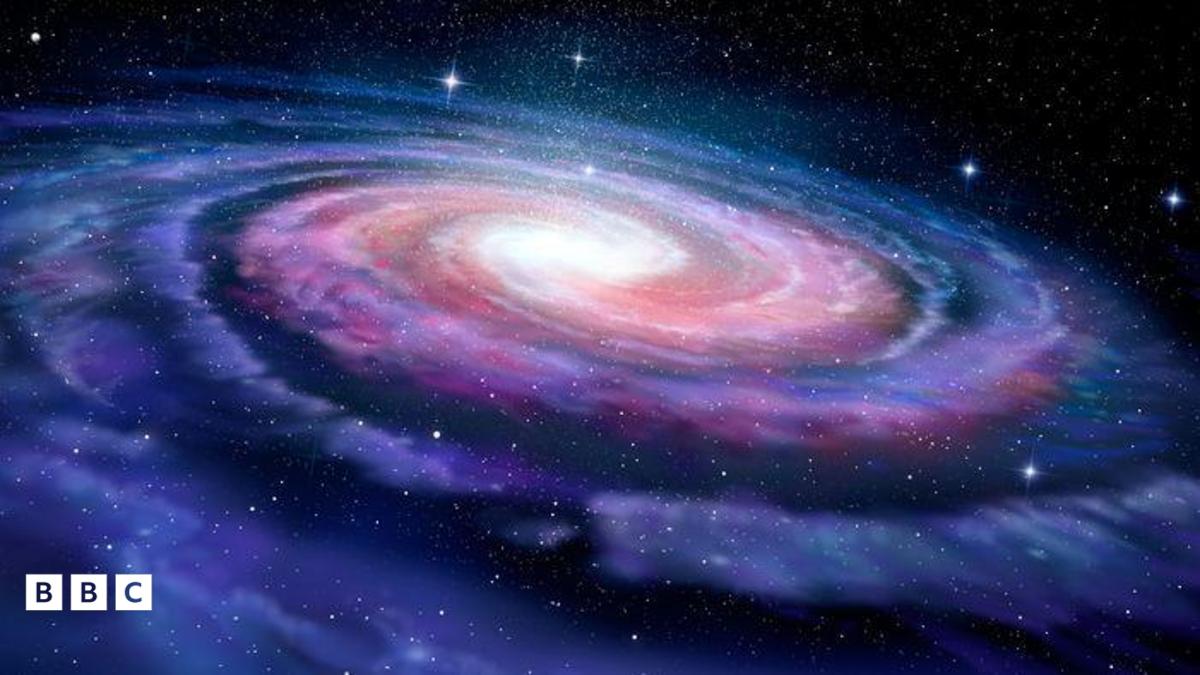
Our home galaxy - the Milky Way - is a giant, spiral galaxy, which according to Nasa is made up of approximately 100 billion stars. Earth is located along one of the galaxy's long, curved spiral arms, around halfway from the centre. A team of scientists used data from the European Space Agency's XMM-Newton and Nasa's Chandra X-ray space telescopes to take a closer look at three bright cosmic explosions called gamma-ray bursts. These are among some of the brightest explosions known to take place in the universe, and occur in galaxies far beyond our Milky Way. However, scientists were able to track the light given off from these gamma-ray bursts as they bounced off dust clouds in the spiral arms of our galaxy. They were then able to work out exactly how far away the dust clouds were - which in turn helped reveal the distance to the outer parts of the Milky Way. The team found that two of the Milky Way's spiral arms may be more distant from the centre of the galaxy than previously thought - by up to 10%. That means that the Milky Way could be slightly larger than earlier maps suggested. Experts say the findings could help them improve their understanding of the Milky Way, and that further research could build an even more detailed picture of our home galaxy.