Top stories from around the web:

NASA Scientist Proposes Theory of Alien Civilizations Throughout Milky Way
NASA astrophysicist Robin Corbet has proposed a theory that the Milky Way contains a modest number of alien civilizations throughout the galaxy, suggesting that they are only slightly more advanced than humans and eventually give up on exploring the cosmos due to limitations in their search for alien technology. This theory suggests that while aliens may have the capability to travel to other stars, they ultimately decide it’s not worth the cost. However, Michael Garrett, director of the Jodrell Centre for Astrophysics, disagrees with this view, stating that it projects a more human-like perspective towards the rest of the cosmos. Corbet's hypothesis is currently being considered for publication in Acta Astronautica.
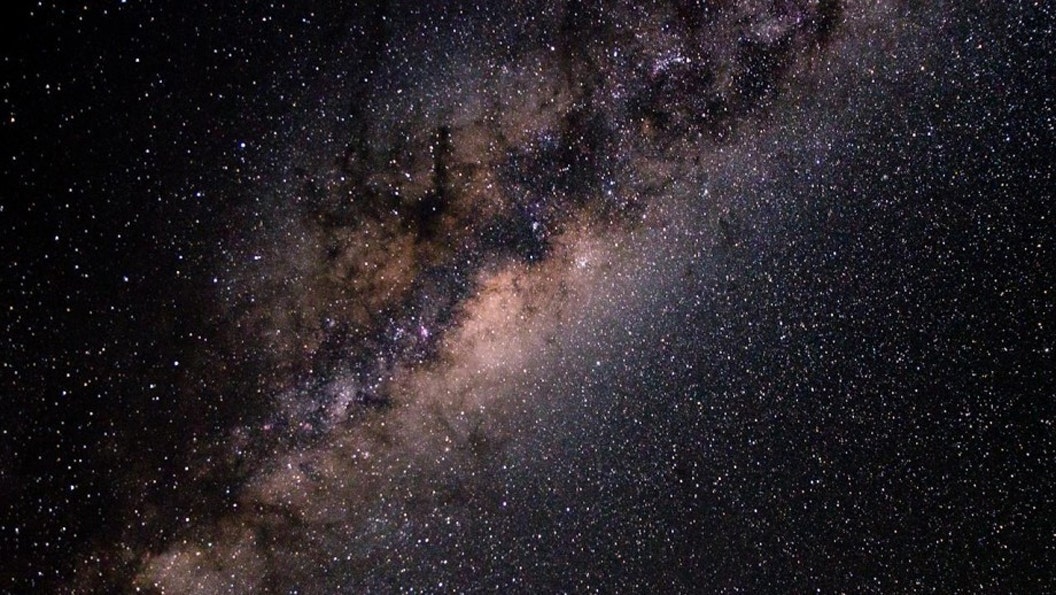
Milky Way galaxy on 'collision course' with nearby 'monster' galaxy
A study by the Australian National University has found that the Milky Way galaxy, home to all forms of life, is on a collision course with its cosmic neighbor, Andromeda, for about 4.5 billion years. The research suggests that Andromeda's size, which is significantly larger than the current Milky Way, likely makes it a "cannibalistic" neighbor, which has swallowed up more galaxies in its past than it was previously given credit for. The researchers used five telescopes to observe at least two clusters of stars in Andromeda's orbit that did not match each other or the rest of the galaxy. The discovery could help determine the fate of our Milky Way.

Hidden galaxy within our galaxy discovered — billions of years after Milky Way ate it
A study by the Monthly Notices of the Royal Astronomical Society has revealed that a hidden galaxy within the Milky Way, named Loki, was consumed by our own solar system billions of years ago when it was expanding. The researchers studied a sample of 20 metal-poor stars on the galactic plane, which were found to contain traces of cosmic explosions that discharged heavy elements. However, these remnants were not identified as a White Dwarf, which takes billions to form after a star the size of our sun runs out of fuel and sheds its outer layers. The discovery was made by studying the compositions and orbital behavior of these particular stars.

Astronomers measure 'warp speed' of Milky Way galaxy
Chinese astronomers have discovered that the warp in the Milky Way's spiral disk is precessing backward due to the influence of the mass of dark matter that forms an invisible halo around the galaxy. The discovery was made using the "motion picture" method, which used data from the's astrometric spacecraft' to map the warp's position and speed. The team found that the precession rate decreases with distance from the galactic center, which will lead to greater warping of the disk. The findings could potentially help predict how dark matter is being distributed in the universe, leading to models that attempt to predict what is made of it.

NASA news: Hubble telescope targets 'Godzilla galaxy' 2.5 times bigger than the Milky Way
The "Godzilla galaxy", officially named UGC 2885, is believed to hold at least 10 times as many stars as our Milky Way galaxy and is 2.5 times larger than the Milky Way. Despite its terrifying nickname, the galaxy is considered a "gentle giant" of sorts and has been slowly growing for billions of years. Despite this, it appears to be sluggish and has only begun producing new stars at a "modest" rate. The name was chosen by Benne Holwerda of the University of Louisville in Kentucky, who found the galaxy was packed with dark matter, an undetectable substance that gives the galaxy most of its mass. Astronomers are currently baffled by the size of the galaxy and are planning to address this mystery at the American Astronomical Society meeting in Honolulu, Hawaii, between January 4 and January 8.